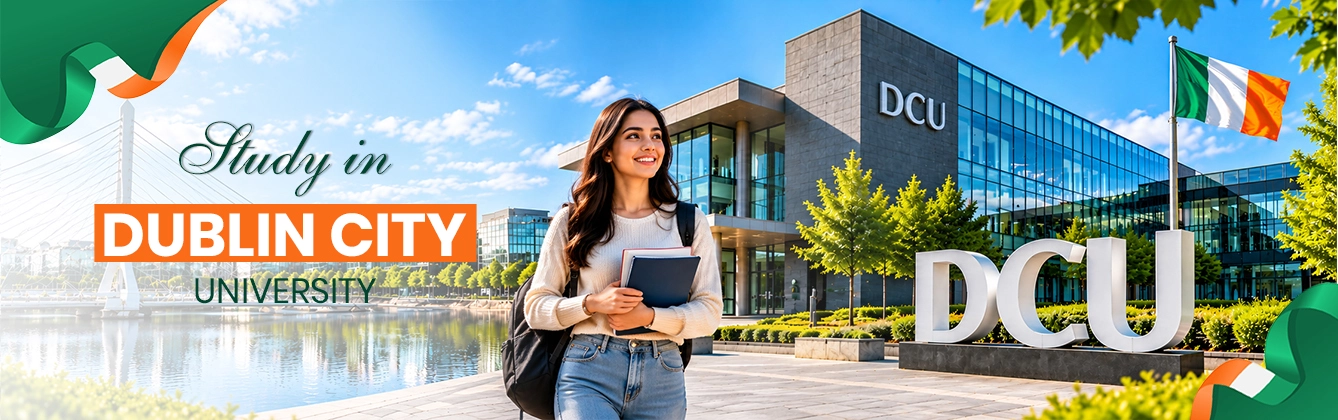
Dublin City University
Dublin City University (DCU) is a public university located in Dublin, Ireland. Originally established as the National Institute for Higher Education, Dublin, in 1975, the institution welcomed its first students in 1980 and achieved university status in 1989.
DCU offers a broad range of undergraduate and postgraduate programs in business, engineering, computing, science, health, education, humanities, and social sciences. Its academic environment combines classroom learning, research, and opportunities to develop practical skills relevant to professional careers.
For international students planning to study in Ireland, Dublin City University is an option to consider when comparing universities, courses, tuition fees, and career pathways. The university has three academic campuses in north Dublin: Glasnevin, St. Patrick's, and All Hallows. Its main Glasnevin campus includes academic facilities, a library, sports facilities, dining options, and student accommodation.
Overview of Dublin City University
Particular | Details |
|---|---|
University name | Dublin City University |
Country | Ireland |
Main location | North Dublin |
Total Students | 20,000+ |
Courses Offered | 200+ programmes |
Popular Courses | Business, Computer Science, Engineering, Education |
Established Year | 1975 |
Campus Facilities | Library, laboratories, sports centre, student accommodation |
International Students | Students from international backgrounds |
Why Study at Dublin City University?
Wide Range of Academic Programmes
DCU offers degree programs across multiple disciplines. Students can explore courses in business, computing, engineering, education, science, health, humanities, and social sciences. Reviewing the individual course page is essential because entry requirements, duration, and tuition fees differ between programs.
Practical and Career-Oriented Learning
Depending on the course, students may have opportunities to participate in work placements, projects, industry-linked activities, or research. Applicants should review the course curriculum to understand the practical components and professional opportunities available in their chosen field.
International Student Community
DCU welcomes students from different countries and provides information and support for international applicants. Studying in a multicultural environment can help students develop communication, teamwork, and cross-cultural skills.
Campus Facilities
The university's campuses provide academic and student facilities, including libraries, sports and recreational facilities, dining options, and student services. Students should check which campus hosts their selected course before arranging accommodation.
Location in Dublin
Dublin offers access to businesses, technology companies, professional services, cultural attractions, and public transport. However, living expenses can be significant, so students should prepare a realistic budget for accommodation, food, transport, and personal expenses.
Popular Courses at Dublin City University
DCU offers programs at undergraduate and postgraduate levels. The following are examples of study areas that prospective students can explore.
Study area | Examples of programs or subjects |
|---|---|
Business | Business Studies, Accounting and Finance, Business Analytics and Marketing |
Engineering | Mechanical Engineering, Electronic and Computer Engineering, Biomedical Engineering |
Computing | Computer Applications, Data Science, and Computing |
Science and Health | Programs across science and health-related disciplines |
Humanities and Social Sciences | International Relations, Journalism, Communications, and Related Subjects |
Eligibility Criteria for International Students
Admission requirements vary according to the course and level of study. Applicants should check both the general university requirements and the specific requirements of their chosen program.
Common requirements may include:
Recognized secondary-school qualifications for undergraduate admission.
A relevant bachelor's degree for postgraduate admission.
Required academic grades and prerequisite subjects.
English-language proficiency evidence, where applicable.
Academic transcripts and certificates.
A valid passport and supporting application documents.
Additional tests, portfolios, references, or experience, if specified for the program.
English-Language Requirements
Applicants whose first language is not English may need to demonstrate proficiency through an accepted English-language test or qualifying prior education. DCU's published minimum undergraduate English-language standard has included IELTS Academic 6.5 overall, with no individual component below 6.0. Some programs may require higher scores, and applicants must check the latest requirements for their chosen course.
Documents Required for Admission
The documents required depend on the program and applicant's educational background. Students may need to prepare:
Valid passport.
Academic certificates and marksheets.
Official academic transcripts.
English-language test results, if required.
Statement of purpose or personal statement, where requested.
Curriculum vitae for relevant postgraduate courses.
Letters of recommendation, if required.
Portfolio or additional assessment materials for specific programs.
Completed application form.
Other documents specified by the university.
Applicants should submit documents in the format requested by DCU. Any translation, certification, or verification requirements should be confirmed before submission.
Fee Structure of Dublin City University
| label | value |
|---|---|
| Tuition Fee | Contact for details |
Admission Process at Dublin City University
Select a Course
Explore the official DCU course catalogue and shortlist programmes that match your academic background and career interests.
Check Entry Requirements
Review academic grades, prerequisite subjects, English-language requirements, and the course's application deadline.
Prepare Your Documents
Collect your certificates, transcripts, passport, and other program-specific documents.
Submit Your Application
Follow the university's official application instructions. Application routes and deadlines may differ for undergraduate and postgraduate programs.
Track Your Application
Respond to requests for additional information and follow any assessment or interview instructions.
Review Your Offer
Check the course name, conditions of admission, tuition fee, deposit requirements, and refund policy before accepting an offer.
Prepare for Your Student Visa
If you require an Irish study visa, review the current official immigration requirements. Prepare the documents applicable to your situation, which may include an acceptance letter, evidence of fee payment, financial evidence, medical insurance, and passport details.
Arrange Accommodation and Travel
Confirm accommodation and budget for living expenses and make travel arrangements after checking the relevant visa and immigration requirements.
Student Life and Accommodation
DCU provides information about student accommodation, but availability and charges depend on the accommodation type and intake. Students should apply early and check the university's current booking procedures.
If university accommodation is unavailable, private rental housing may be an alternative. Before signing a rental agreement, review the rent, deposit, utilities, contract duration, and distance from campus.
Students should also budget for food, public transport, mobile connectivity, study materials, and personal expenses. Dublin's living costs can be substantial, so planning finances before departure is important.
University clubs, societies, sporting activities, and student services can also help students participate in campus life and build connections.
Career Opportunities After Graduation
DCU graduates may pursue employment, further study, or professional development depending on their degree, skills, and eligibility to work in Ireland or another country.
Career opportunities depend on the selected subject, work experience, language skills, and the requirements of individual employers. Some professions also require professional registration or additional qualifications.
International students should research the current Irish immigration rules for post-study options and employment permission. Completing a degree does not automatically guarantee a job or long-term permission to remain in Ireland.
Why Choose iExplain Education?
Choosing a university abroad requires careful research and preparation. iExplain Education helps students understand their study options and navigate the application process.
Our guidance may include:
Information about universities and courses in Ireland.
Help understand course entry requirements.
Guidance on preparing application documents.
Assistance with reviewing tuition fees and living-cost estimates.
Support in understanding application steps and timelines.
Guidance on questions to verify before accepting an offer.
Students should confirm all course details, fees, admission decisions, visa rules, and immigration requirements with the relevant official authorities. Admission guidance does not guarantee an offer, visa approval, or employment.