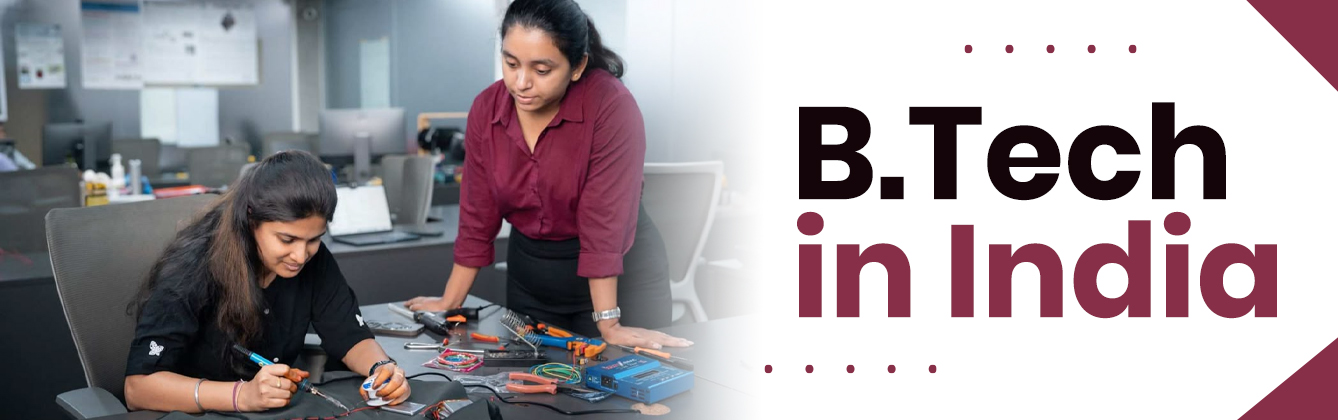
Study B.Tech in India - Complete Guide for Engineering Aspirants
B.Tech in India (Bachelor of Technology) is one of the most popular and career-oriented undergraduate degree programs for students who aspire to build a strong future in the field of engineering, technology, and innovation. It is a professional course designed to equip students with technical knowledge, analytical thinking, problem-solving skills, and practical exposure required in today's fast-growing industries. In India, B.Tech is offered by a wide range of institutions including IITs, NITs, government colleges, private universities, and deemed universities, making it one of the most accessible and in-demand courses after completing 12th with Science (PCM).
The duration of B.Tech in India is generally 4 years, divided into 8 semesters, where students study both core engineering subjects and specialization-based subjects. The course structure includes classroom learning, laboratory work, industrial training, live projects, and internships, which help students gain real-world experience and industry readiness. Some of the most popular specializations in B.Tech in India include Computer Science Engineering (CSE), Mechanical Engineering, Civil Engineering, Electrical Engineering, Electronics & Communication Engineering (ECE), Artificial Intelligence, Data Science, and Information Technology (IT).
Admission to B.Tech in India is mainly based on national and state-level entrance exams such as the JEE Main, JEE Advanced, and various state CET exams, along with private university entrance tests. These exams evaluate students' knowledge in Physics, Chemistry, and Mathematics, and play a crucial role in determining admission to top engineering colleges. Due to high competition, students often prepare rigorously to secure a seat in reputed institutions.
One of the biggest advantages of pursuing B.Tech in India is the wide range of career opportunities available after graduation. Students can work in IT companies, core engineering sectors, manufacturing industries, research and development organizations, startups, and government sectors. With the rapid growth of technology, fields like Artificial Intelligence, Machine Learning, Cybersecurity, Data Science, and Robotics are creating new and high-paying job opportunities for B.Tech graduates.
Additionally, students can opt for higher education such as M.Tech, MBA, or MS abroad, or prepare for competitive exams like GATE, UPSC, and other government job exams. Entrepreneurship is also a growing trend, with many engineering graduates starting their own startups.
B.Tech in India – Overview
| Course Name | B.Tech (Bachelor of Technology) |
| Course Level | Undergraduate |
| Duration | 4 Years (8 Semesters) |
| Eligibility | 10+2 with Physics, Chemistry & Mathematics (PCM) |
| Minimum Marks | 50–75% (varies by college) |
| Entrance Exams | JEE Main, JEE Advanced, State CETs, University Exams |
| Admission Process | Entrance Exam + Counselling |
| Top Specializations | CSE, Mechanical, Civil, Electrical, ECE, AI, Data Science, IT |
| Course Structure | Theory + Practical + Labs + Internships + Projects |
| Top Recruiters | TCS, Infosys, Wipro, Google, Microsoft |
| Career Options | Engineer, Software Developer, Data Analyst, Researcher, Entrepreneur |
What is B.Tech?
B.Tech (Bachelor of Technology) is a 4-year undergraduate engineering degree that focuses on technical knowledge, practical skills, and industry-oriented learning. It is designed to prepare students for careers in engineering, technology, and innovation across various sectors.
Engineering Foundation
B.Tech provides a comprehensive foundation in engineering principles, combining theoretical knowledge with practical application. Students learn core subjects in Physics, Chemistry, and Mathematics, along with specialized engineering topics relevant to their chosen branch.
Specialization Options
The program offers diverse specializations including Computer Science Engineering (CSE), Mechanical Engineering, Civil Engineering, Electrical Engineering, Electronics & Communication Engineering (ECE), Artificial Intelligence, Data Science, and Information Technology (IT), allowing students to align their education with career goals.
Industry Readiness
Through internships, industrial training, live projects, and hands-on laboratory work, B.Tech programs ensure students are industry-ready upon graduation. The curriculum is regularly updated to match current technological trends and market demands.
Career Opportunities After B.Tech in India
One of the biggest advantages of pursuing B.Tech in India is the wide range of career opportunities available after graduation. Students can work in IT companies, core engineering sectors, manufacturing industries, research and development organizations, startups, and government sectors.
IT and Software Industry
B.Tech graduates, especially from CSE, IT, and related branches, can work as software developers, data analysts, system engineers, and IT consultants in companies like TCS, Infosys, Wipro, Google, Microsoft, and Amazon.
Core Engineering Sectors
Graduates from Mechanical, Civil, Electrical, and ECE branches can work in manufacturing industries, construction companies, power sectors, automobile industries, and PSUs (Public Sector Undertakings).
Higher Education
Students can opt for higher education such as M.Tech for specialization, MBA for management roles, or MS abroad for international exposure and research opportunities.
Competitive Exams and Government Jobs
B.Tech graduates can prepare for competitive exams like GATE, UPSC, SSC, and other government job exams for positions in railways, defense, civil services, and other public sectors.
Research and Development
Students interested in innovation can pursue careers in R&D departments of tech companies, ISRO, DRDO, and academic research institutions.
Entrepreneurship and Startups
Entrepreneurship is a growing trend, with many engineering graduates starting their own tech startups, consulting firms, or innovation-driven businesses.
Advantages of Pursuing B.Tech in India
Pursuing B.Tech in India offers several key advantages for students who want to build a specialized and successful career in engineering and technology.
Wide Range of Career Opportunities
B.Tech opens doors to diverse career paths in IT, core engineering, research, government sectors, and entrepreneurship, with excellent growth potential.
Industry-Relevant Skills
The curriculum combines theoretical knowledge with practical training through labs, projects, internships, and industrial exposure, making graduates industry-ready.
High Earning Potential
Engineering graduates, especially from top colleges and in-demand specializations like CSE, AI/ML, and Data Science, command competitive salaries ranging from ₹3-10 LPA and higher.
Gateway to Higher Education
B.Tech serves as a strong foundation for pursuing advanced degrees like M.Tech, MBA, MS abroad, or PhD, opening doors to specialized roles and research careers.
Innovation and Problem-Solving
Engineering education develops critical thinking, analytical abilities, and problem-solving skills that are valuable across all industries and life situations.